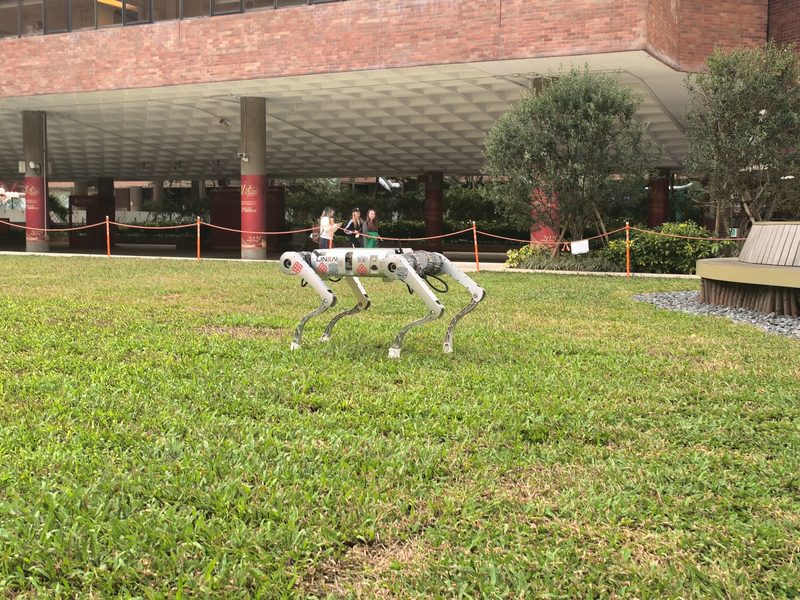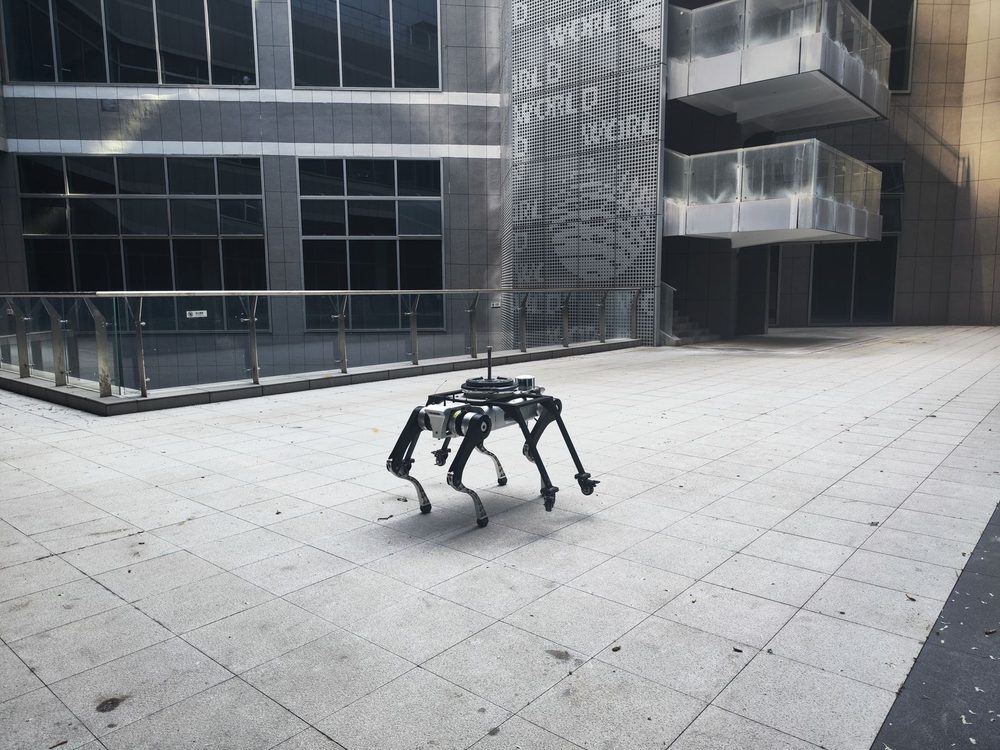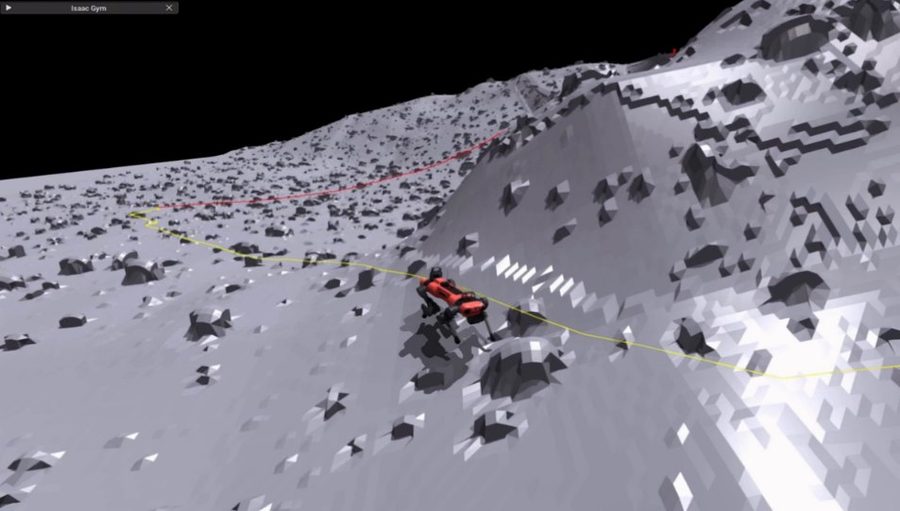
Legged robots can climb stairs, step over kerbs and walk where wheels cannot. With different sensors and software, the same quadruped can guide a person, carry a load or inspect a plant room.
Teams use the club's quadruped platforms, and later the robot dog the club builds itself, to develop one application at a time, from a first demonstration on campus to a reliable system.
- Type
- Robot platform
- Applications
- Guide dog, delivery, inspection, search and rescue
- Key skills
- Legged locomotion, perception, path planning, human–robot interaction
- Who can lead
- Tier 1 and Tier 2 members, by proposal
Applications
Each application is a possible project.
Guide dog
Guiding visually impaired people along pavements and indoor routes, detecting obstacles, kerbs and stairs, and giving clear feedback through a handle.
Delivery
Carrying parcels and supplies for the last hundred metres, including up and down stairs that wheeled robots cannot use.
Inspection and patrol
Routine checks in plant rooms, tunnels and substations: reading gauges, listening for faults and reporting changes.
Search and rescue
Moving through rubble and rough ground, as in the RoboCup Rescue league.
Engineering foundations
Two ideas every legged-robot team needs.
Static stability
At low speed, the centre of mass must stay inside the polygon formed by the feet on the ground.
Joint torques from foot force
Used to control how hard each foot pushes, for carrying a load or walking on stairs.
Photos